Program Studi Informatika Program Magister Fakultas Teknologi Industri (FTI) Universitas Islam Indonesia (UII) kembali membuka skema Beasiswa Kompetitif bagi calon penerima yang berasal dari perguruan tinggi selain UII (non-alumni UII). Berikut surat resmi yang dikeluarkan oleh Program Studi dapat dilihat pada Penawaran Beasiswa Kompetitif Semester Ganjil 2627.
Program Doktor Informatika resmi menyambut mahasiswa baru angkatan tahun akademik 2025/2026 semester Genap melalui kegiatan orientasi akademik yang diselenggarakan pada Jumat, 24 April 2026. Acara ini berlangsung di lingkungan kampus dan dihadiri oleh seluruh mahasiswa doktoral yang baru diterima, jajaran pimpinan jurusan dan studi, serta para dosen pengampu.
Kegiatan penyambutan ini dirancang sebagai jembatan awal antara mahasiswa baru dengan ekosistem akademik Program Doktor Informatika. Tiga agenda utama tersaji secara berurutan: pengenalan dosen, pembekalan akademik, dan kuliah umum, yang keseluruhannya bertujuan mempersiapkan mahasiswa untuk menempuh studi doktoral dengan landasan yang kokoh.
Sesi pembuka diisi dengan sambutan dari Ketua Jurusan, Ir. Raden Teduh Dirgahayu, S.T., M.Sc., Ph.D., lalu dilanjutkan perkenalan resmi seluruh dosen Program Doktor Informatika oleh Kaprodi, Dr. Novi Setiani. Para mahasiswa baru mendapat kesempatan untuk mengenal secara langsung profil akademik, bidang keahlian, serta topik riset yang menjadi fokus masing-masing dosen. Momen ini menjadi sangat strategis, mengingat kesesuaian antara minat riset mahasiswa dengan kompetensi promotor merupakan salah satu kunci keberhasilan studi doktoral.
Sesi kedua difokuskan pada pembekalan komprehensif mengenai sistem dan tata kelola akademik program doktor. Pengelola program studi memaparkan berbagai hal esensial yang wajib dipahami mahasiswa, mulai dari struktur kurikulum dan luaran publikasi yang diharapkan, prosedur pemilihan topik penelitian dan pembimbing, hingga tahapan besar yang harus dilalui: ujian kualifikasi proposal, seminar hasil, dan sidang disertasi. Sesi ini diakhiri dengan tanya jawab yang cukup antusias, mencerminkan tingginya semangat dan rasa ingin tahu para peserta dalam memahami perjalanan studi yang akan mereka tempuh.
Puncak kegiatan hari itu adalah kuliah umum yang menghadirkan narasumber Prof. Sri Kusumadewi, S.Si., M.T. yang membawakan tajuk “Bahagia Menjadi Mahasiswa Doktoral”. Materi ini disampaikan sebagai bekal psikologis dan motivasional bagi para mahasiswa baru, sebuah perspektif yang kerap luput dari pembekalan akademik konvensional namun sangat krusial dalam menentukan keberhasilan studi doktoral. Narasumber mengawali pemaparan dengan mengajak mahasiswa untuk meluruskan persepsi tentang studi doktoral: bahwa perjalanan riset bukan semata-mata tentang mengejar gelar, melainkan tentang menemukan kebermaknaan dalam proses berpikir, bertanya, dan berkontribusi. Beberapa kunci kebahagiaan dalam studi doktoral pun diulas secara gamblang: memilih topik riset yang benar-benar diminati, membangun komunikasi yang sehat dengan promotor, memiliki lingkaran dukungan sosial yang kuat, serta menjaga keseimbangan antara kehidupan akademik dan personal. Narasumber juga menekankan pentingnya mengelola ekspektasi, merayakan capaian-capaian kecil, dan tidak membandingkan laju kemajuan diri dengan rekan sejawat.
Kuliah umum ini disambut dengan antusias oleh para peserta. Sesi tanya jawab yang menyertainya berlangsung hangat dan reflektif, dengan mahasiswa berbagi kekhawatiran serta harapan mereka. Suasana yang tercipta bukan sekadar ceramah akademik, melainkan sebuah dialog jujur tentang suka duka menjadi peneliti yang menempuh jalur doktoral.
Rangkaian kegiatan hari itu ditutup dengan kunjungan langsung ke fasilitas laboratorium yang dimiliki Program Doktor Informatika. Para mahasiswa baru diajak berkeliling untuk mengenal secara dekat ruang riset yang akan menjadi tempat mereka berkarya selama masa studi. Kunjungan ini dipandu oleh dosen dan tenaga laboran yang menjelaskan fungsi serta kapabilitas masing-masing laboratorium.
Kegiatan orientasi akademik ini menjadi penanda dimulainya babak baru dalam perjalanan ilmiah para mahasiswa doktoral. Program Doktor Informatika berkomitmen untuk terus menyediakan lingkungan akademik yang kondusif, suportif, dan berorientasi pada riset berkualitas tinggi, demi melahirkan lulusan doktor yang tidak hanya kompeten secara teknis, tetapi juga mampu berkontribusi secara signifikan bagi perkembangan ilmu dan teknologi, khususnya di bidang informatika.
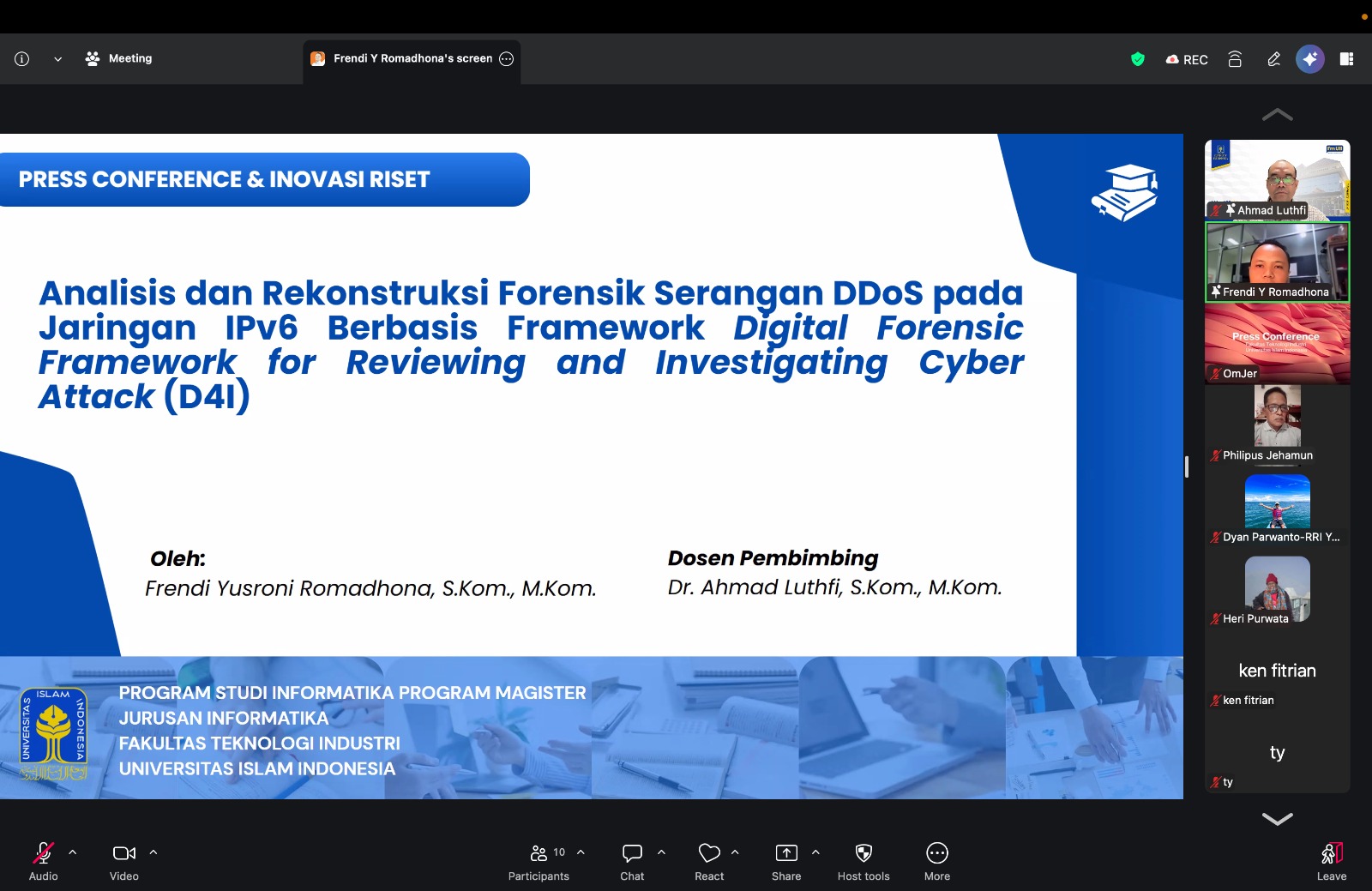
Sleman, Yogyakarta – Program Studi Magister Informatika, Fakultas Teknologi Industri Universitas Islam Indonesia (FTI UII), secara resmi menggelar Konferensi Pers pada Selasa (28/4/2026) untuk memperkenalkan terobosan terbaru di bidang keamanan siber, yaitu metode investigasi forensik real-time untuk menangani serangan Distributed Denial of Service (DDoS) pada jaringan IPv6.
Konferensi pers ini menyoroti urgensi meningkatnya ancaman siber seiring dengan transisi global dari IPv4 ke IPv6. Dalam paparannya, tim akademik menjelaskan bahwa serangan DDoS pada jaringan IPv6 memiliki karakteristik yang lebih kompleks dan sulit dideteksi, bahkan berpotensi menyebabkan gangguan serius hingga melumpuhkan layanan jaringan secara keseluruhan.
Penelitian yang menjadi sorotan dalam konferensi ini dikembangkan oleh Frendi Yusroni, alumni Magister Informatika UII, di bawah bimbingan Dr. Ahmad Luthfi. Penelitian tersebut menghadirkan pendekatan inovatif melalui integrasi metode Live Forensics dengan framework Digital Forensic Framework for Reviewing and Investigating Cyber Attack (D4I). Menurut Dr. Ahmad Luthfi, pendekatan ini menjadi terobosan penting dalam dunia forensik digital karena mampu melakukan proses investigasi tanpa mengganggu operasional sistem. “Integrasi ini memungkinkan investigasi dilakukan secara real-time tanpa mematikan perangkat, sehingga kontinuitas layanan jaringan tetap terjaga,” jelasnya dalam konferensi tersebut.
Dalam implementasinya, metode ini mampu mengakuisisi data volatil seperti log memori, CPU, dan trafik jaringan secara langsung saat serangan berlangsung. Selanjutnya, data tersebut dianalisis menggunakan pendekatan Cyber Kill Chain dan Chain of Artifacts untuk merekonstruksi pola serangan secara sistematis. Frendi Yusroni menjelaskan bahwa penelitian ini telah diuji melalui berbagai skenario serangan DDoS pada lingkungan terkendali. Hasilnya menunjukkan bahwa metode yang dikembangkan tidak hanya mampu mendeteksi serangan secara lebih akurat, tetapi juga membedakan karakteristik serangan yang menargetkan infrastruktur jaringan maupun sumber daya server secara spesifik.
Lebih lanjut, penelitian ini berhasil menghasilkan rekonstruksi kronologi serangan yang lengkap berbasis pendekatan 5W1H (What, Who, Where, When, Why, How), sehingga dapat memberikan bukti digital yang kuat dan valid untuk kebutuhan investigasi maupun penegakan hukum. Rilis penelitian ini turut mendapat perhatian luas dari berbagai media nasional dan regional, yang menyoroti kontribusinya dalam menjawab tantangan keamanan siber modern, khususnya pada ekosistem jaringan IPv6 yang semakin kompleks.
“Dari Kampus untuk Dunia Nyata”
Keberhasilan penelitian ini menjadi bukti nyata bahwa proses pembelajaran di Magister Informatika UII tidak hanya berfokus pada teori, tetapi juga menghasilkan inovasi yang berdampak langsung bagi masyarakat dan dunia industri. Melalui riset yang dikembangkan oleh Frendi Yusroni bersama dosen pembimbing Dr. Ahmad Luthfi, Magister Informatika UII menunjukkan komitmennya dalam mencetak talenta digital yang mampu menghadirkan solusi nyata terhadap permasalahan global di bidang teknologi informasi.
Ingin menjadi bagian dari inovasi teknologi yang berdampak nyata?
Magister Informatika UII membuka kesempatan bagi Anda untuk berkembang, meneliti, dan berkontribusi dalam menyelesaikan tantangan dunia digital masa depan.
Bergabung bersama kami sekarang juga! Dapatkan kesempatan bebas biaya pendaftaran (gratis) di periode pertama pendaftaran pmb.uii.ac.id.
Bersama Magister Informatika UII, belajar tidak hanya untuk memahami, tetapi untuk menciptakan perubahan.
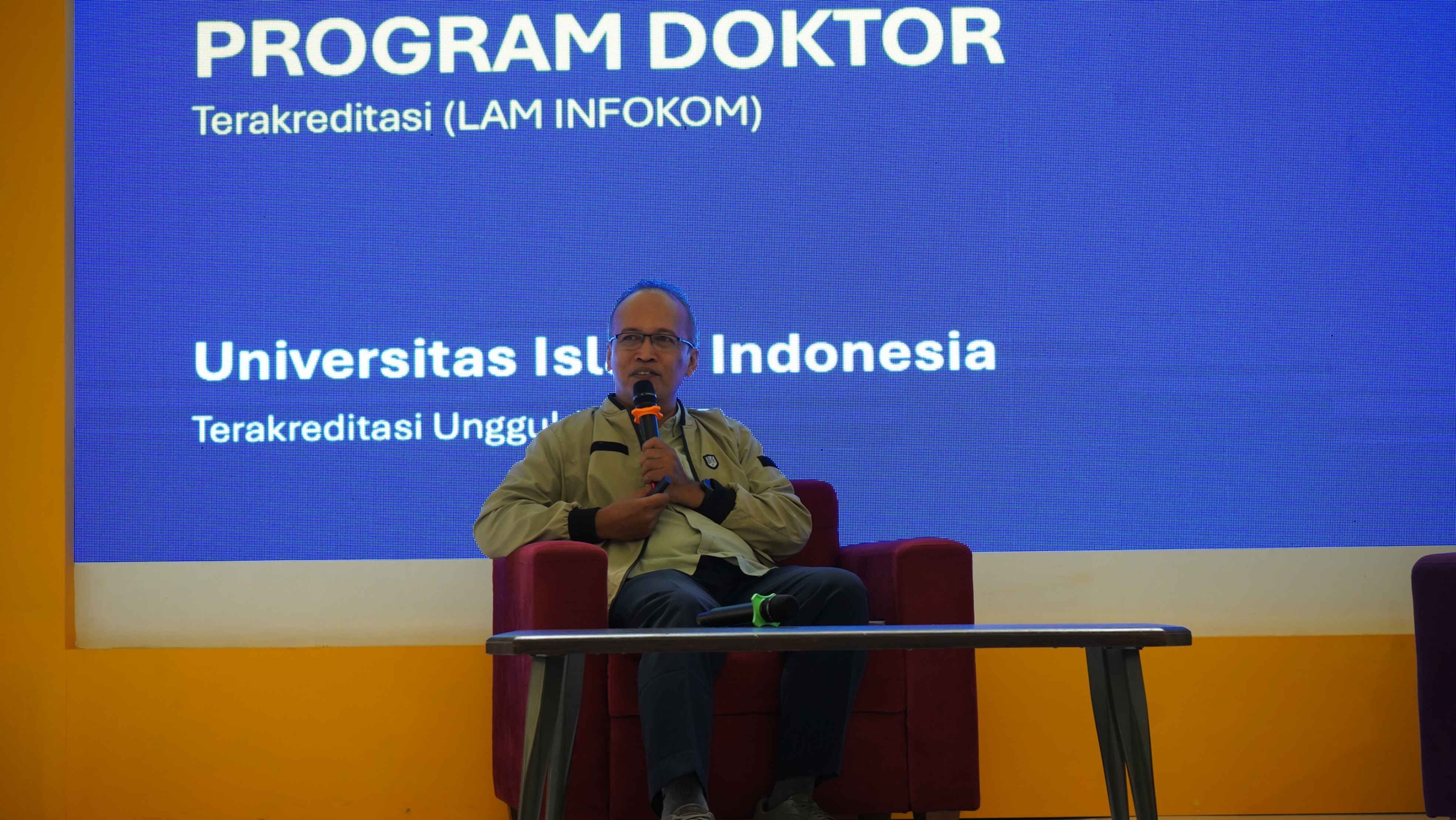
Yogyakarta — Ada yang istimewa dari kehadiran Program Doktor Informatika Universitas Islam Indonesia (UII) di FTI Expo 2026. Berbeda dari program lain yang telah hadir berulang kali dalam pameran tahunan Fakultas Teknologi Industri ini, Program Doktor Informatika UII tampil untuk pertama kalinya — sebuah debut yang sekaligus menandai babak baru dalam ekosistem akademik Informatika UII.
Program Doktor Informatika UII resmi beroperasi pada semester ini, menjadikan FTI Expo 2026 yang berlangsung 8–12 April 2026 di Pakuwon Mall sebagai panggung perdana bagi program jenjang S3 ini untuk memperkenalkan dirinya kepada publik. Dan bersama debut tersebut, hadir kabar yang dinantikan: pendaftaran mahasiswa baru Program Doktor Informatika UII kini resmi dibuka.
Sesi pemaparan berlangsung pada hari pertama Expo, Rabu 8 April 2026, pukul 16.00–17.00 WIB, dipandu langsung oleh Dr. Ir. Raden Teduh Dirgahayu, S.T., M.Sc., Ketua Jurusan Informatika UII. Dengan tenang namun penuh wibawa, beliau membuka pemaparan dengan menegaskan bahwa program ini bukan sekadar perpanjangan dari jenjang magister — melainkan sebuah lompatan menuju frontier ilmu pengetahuan itu sendiri.
Program Doktor Informatika UII dirancang untuk mencetak peneliti dan pemikir yang mampu memberikan kontribusi orisinal bagi perkembangan ilmu teknologi informasi. Fokus riset yang dikembangkan mencakup dua bidang prioritas, yaitu:
- Sistem Informasi Enterprise Inteligen, yang menitikberatkan pada transformasi data menjadi wawasan strategis dalam organisasi,
- Informatika Medis, bidang multidisipliner yang menggabungkan teknologi informasi, data science, dan ilmu kesehatan untuk mendukung transformasi layanan kesehatan digital.
Dr. Teduh menegaskan bahwa Program Doktor Informatika UII terbuka bagi kandidat dari latar belakang akademisi maupun profesional industri yang memiliki rekam jejak riset yang kuat. Mahasiswa doktoral akan mendapat bimbingan intensif dari promotor dan ko-promotor yang merupakan akademisi aktif di penelitian dan publikasi internasional.
Fasilitas pendukung pun tidak kalah mumpuni. Mahasiswa doktoral mendapatkan akses ke perpustakaan digital, basis data jurnal internasional, serta fasilitas komputasi berperforma tinggi. Lingkungan akademik UII yang kondusif mendorong kolaborasi lintas disiplin yang memperkaya kualitas disertasi.
Kehadiran perdana Program Doktor Informatika di FTI Expo 2026 adalah sinyal yang jelas: UII serius membangun ekosistem riset yang utuh — dari sarjana hingga doktoral — dan berkomitmen menghasilkan kontributor nyata bagi ilmu pengetahuan dan pembangunan bangsa.
Bagi para akademisi, peneliti, dan profesional yang selama ini bermimpi untuk mendorong batas-batas ilmu informatika, Program Doktor Informatika UII kini hadir sebagai jawaban.
Informasi lebih lanjut dan pendaftaran dapat diakses melalui informatics.uii.ac.id/doktor-informatika.
Daftar sekarang melalui pmb.uii.ac.id!!
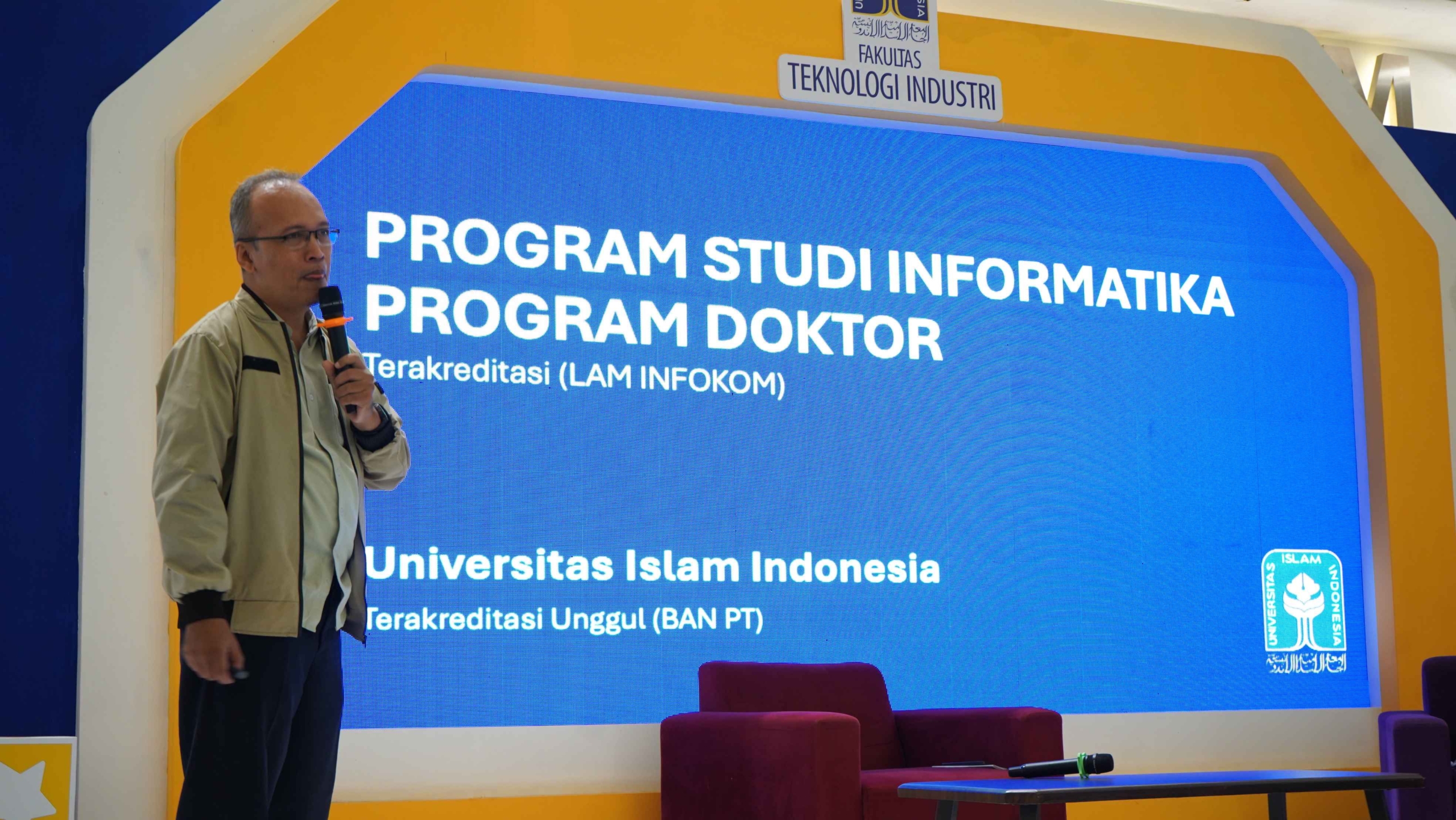
Yogyakarta — Sesi pemaparan Program Magister Informatika Universitas Islam Indonesia (UII) pada hari kedua FTI Expo 2026, Kamis 9 April 2026, berlangsung bukan sekadar sebagai sesi informasi — melainkan sebuah percakapan intelektual yang mendalam. Dr. Ahmad Luthfi, S.Kom., M.Kom., dosen Program Magister Informatika UII yang tampil sebagai narasumber utama, berhasil membawa para pengunjung melihat pendidikan S2 dari perspektif yang jauh lebih luas dari sekadar kelanjutan studi.
Dengan latar belakang riset yang kuat dan keberhasilan meraih pendanaan riset nasional dari BIMA untuk tahun 2026, Pak Luthfi, demikian beliau disapa — menyampaikan pesan yang mengena: pendidikan magister bukan sekadar menambah gelar, melainkan tentang membangun kemampuan berpikir sistemik di tengah kompleksitas dunia digital.
“Di era ketika data menjadi bahasa baru dunia, kita tidak bisa hanya menjadi pengguna teknologi. Kita harus menjadi arsitek solusinya. Itulah yang kami latih di Magister Informatika UII.”
Pak Luthfi memaparkan bahwa Program Magister Informatika UII menawarkan empat spesialisasi unggulan — Enterprise Information Systems, Medical Informatics, Digital Forensics, dan Data Science — yang dirancang bukan hanya untuk menjawab kebutuhan industri saat ini, tetapi juga untuk mengantisipasi kebutuhan masa depan.
Salah satu insight terpenting yang beliau bagikan adalah tentang pergeseran paradigma dalam dunia kerja:
“Dulu, perusahaan mencari orang yang bisa mengoperasikan sistem. Sekarang, mereka mencari orang yang bisa merancang, mengevaluasi, dan memperbaiki sistem itu sendiri. Lulusan S2 kami dipersiapkan untuk peran-peran strategis itu.”
Beliau juga berbicara tentang pentingnya riset dalam ekosistem program magister. Para dosen di Magister Informatika UII bukan hanya pengajar — mereka adalah peneliti aktif yang secara konsisten mempublikasikan karya di jurnal dan konferensi internasional bereputasi. Mahasiswa diajak masuk langsung ke dalam proyek riset tersebut, bukan sekadar menjadi pengamat.
“Riset bukan hanya tentang menghasilkan jurnal. Riset adalah tentang mempertajam cara kita memandang masalah dan menemukan solusi yang belum pernah ada sebelumnya. Di sinilah nilai sejati S2 itu berada.”
Pak Luthfi juga menyentuh aspek yang sering menjadi kekhawatiran para profesional yang ingin melanjutkan studi: keseimbangan antara kuliah dan pekerjaan. Program Magister Informatika UII menawarkan fleksibilitas jadwal yang memungkinkan mahasiswa tetap aktif berkarier tanpa harus meninggalkan pekerjaan mereka.
Lebih jauh, beliau menekankan bagaimana nilai-nilai Islam yang tertanam dalam budaya akademik UII turut membentuk pendekatan etis dalam penerapan teknologi — sebuah perspektif yang semakin relevan di era AI dan big data yang penuh tantangan moral.
Sesi yang berlangsung dalam suasana hangat dan interaktif itu ditutup dengan antusiasme tinggi dari para peserta — mulai dari fresh graduate yang mempertimbangkan studi lanjut, hingga profesional senior yang ingin memperbarui kompetensinya.
Informasi pendaftaran Program Magister Informatika UII dapat diakses melalui informatics.uii.ac.id/magister atau Instagram @magistertf.uii.
Daftar sekarang melalui pmb.uii.ac.id!!
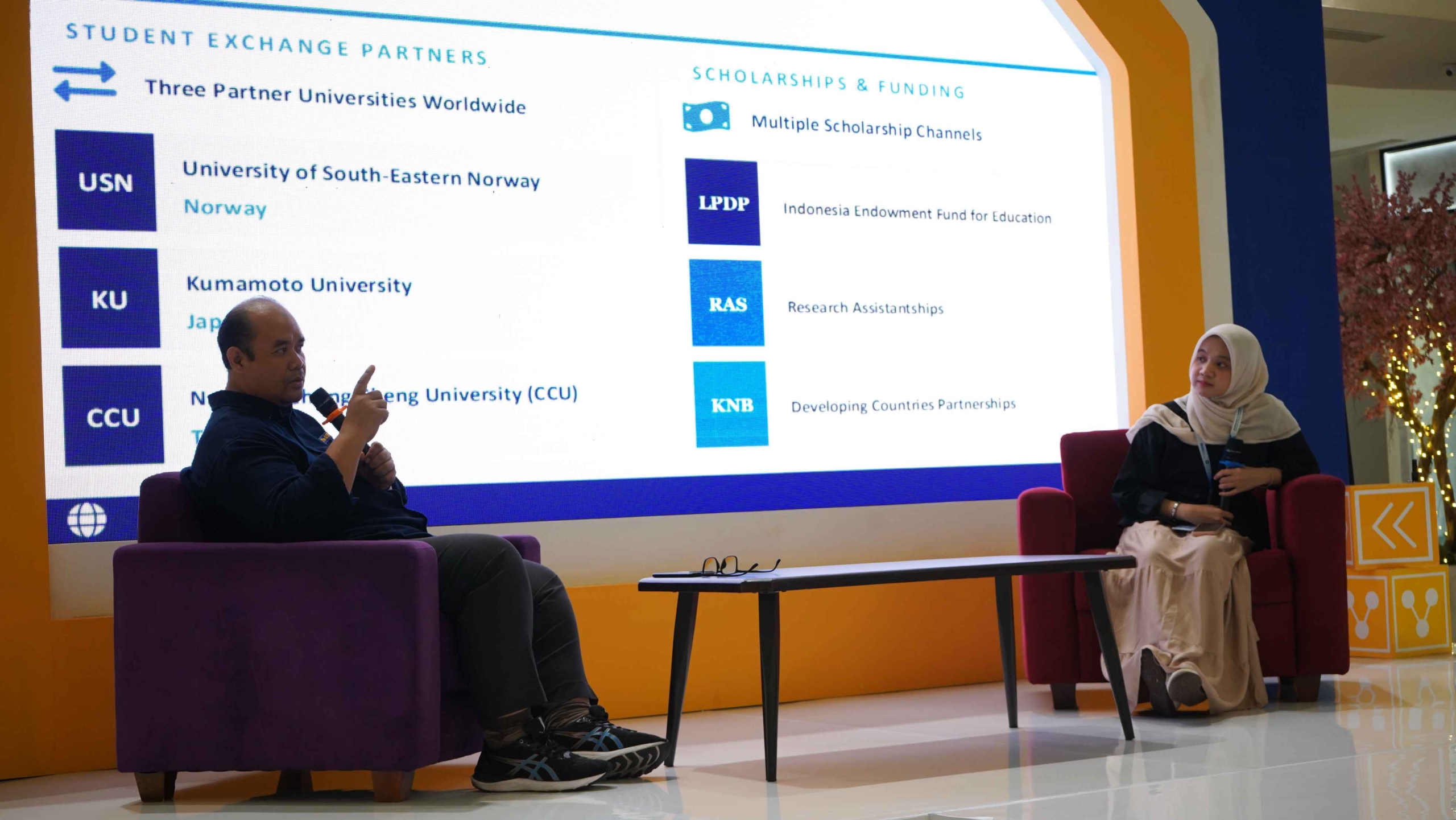
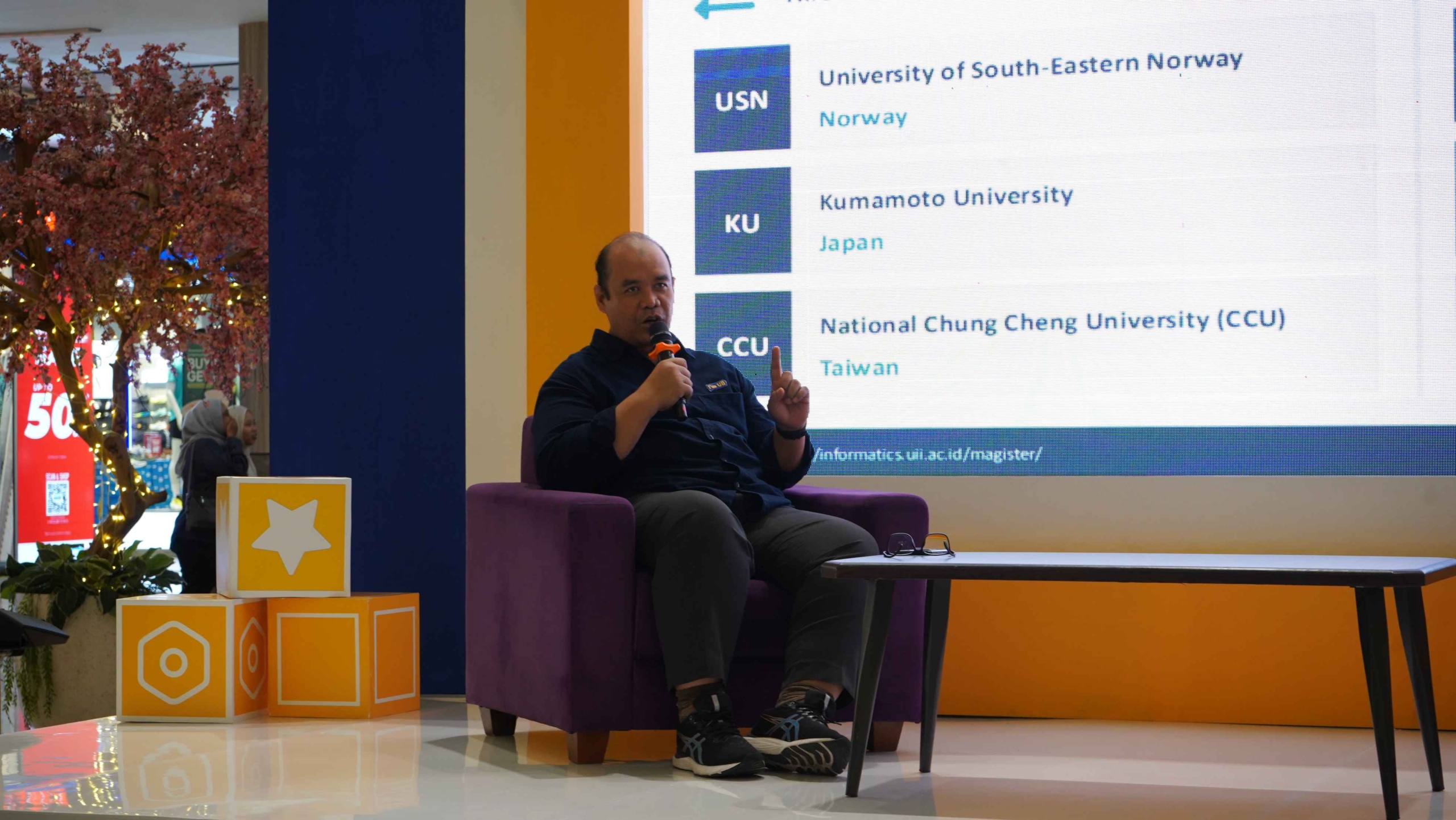
Yogyakarta — While many exhibition booths rely on brochures and verbal explanations, the International Program (IP) booth of UII Informatics at FTI Expo 2026 offered something entirely different: the real, tangible work of its own students. Throughout the five days of the expo — April 8–12, 2026 at Pakuwon Mall, Yogyakarta — visitors had the opportunity to interact directly with innovative projects developed by IP Informatics UII students.
This project showcase set the International Program apart from other study programs at the exhibition. Rather than passively listening to curriculum descriptions, visitors were invited into the lived reality of the IP student experience — an internationally standardized academic ecosystem where all courses are delivered in English.
The students manning the booth did more than explain their projects in fluent English — they fielded technical questions from a diverse audience ranging from parents and high school teachers to industry professionals. These interactions served as living proof that the International Program genuinely prepares its students to communicate and collaborate at a global level.
UII’s International Program in Informatics delivers all coursework in English and provides selected students with the opportunity to earn a Double Degree with a scholarship in China. Its curriculum is aligned with international standards, integrating strong technical foundations with the development of global soft skills.
The presence of IP student projects at FTI Expo 2026 was more than a display — it was a statement. UII Informatics International Program is ready to produce world-class innovators who don’t just think globally, but act locally with real and lasting impact.
Complete information about the UII Informatics International Program is available at informatics.uii.ac.id/sarjana or Instagram @ip.informaticsuii.
Register now at pmb.uii.ac.id!!
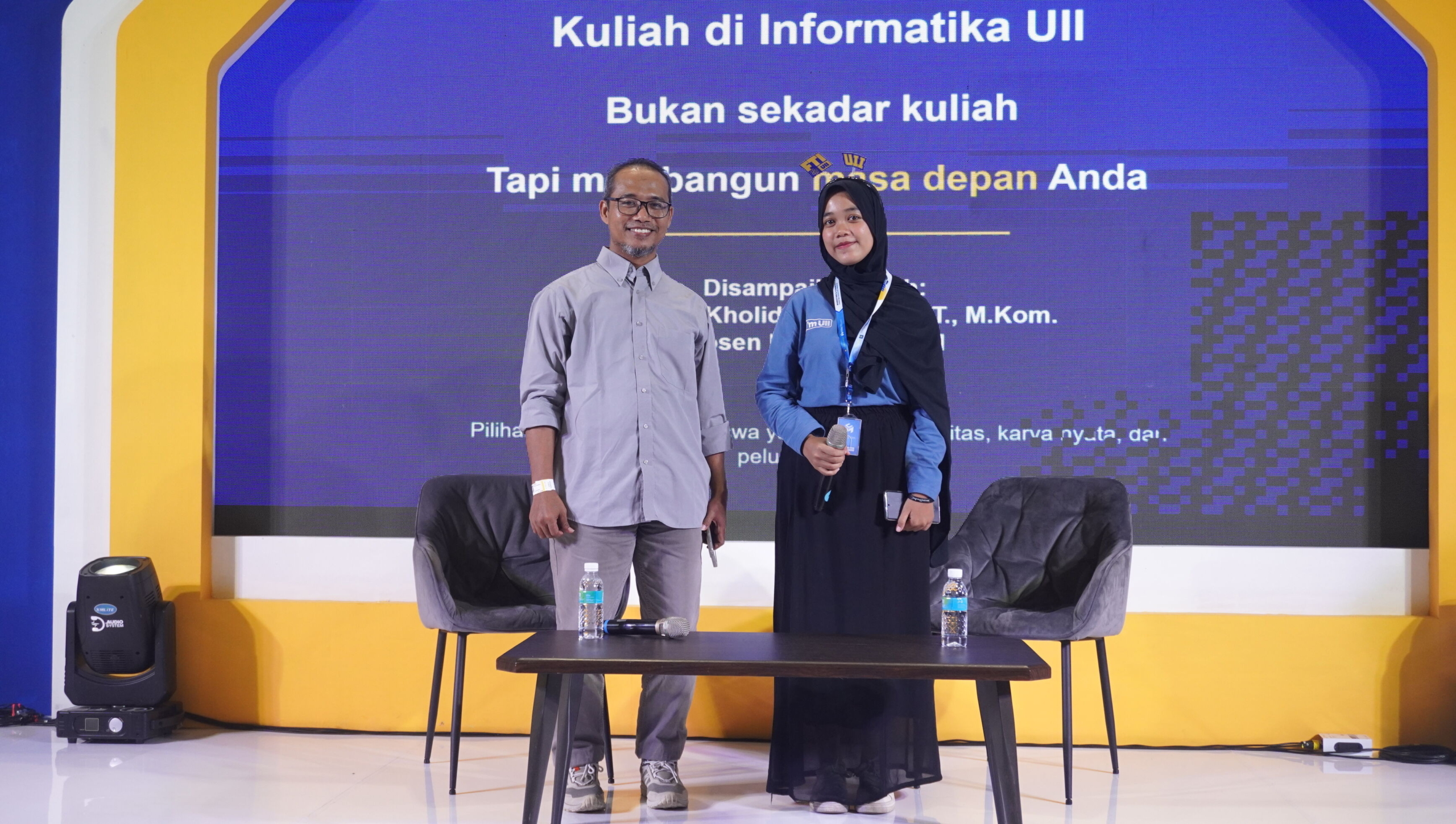
Yogyakarta — FTI Expo 2026 berlangsung pada 8–12 April 2026 di Pakuwon Mall, YogyakartA. Pada hari keempat Expo, Sabtu 11 April 2026, Dr. (cand.) Kholid Haryono, S.T., M.Kom. hadir bukan sekadar menjelaskan program studi — beliau menghadirkan energi, inspirasi, dan keyakinan yang mengalir langsung kepada para calon mahasiswa yang memadati area pameran.
Dengan gaya penyampaian yang hangat, Pak Kholid begitu membuka sesinya dengan sebuah pernyataan yang langsung menarik perhatian:
“Informatika UII bukan tempat kamu belajar coding. Ini adalah tempat kamu belajar berpikir, berkolaborasi, dan menciptakan sesuatu yang benar-benar bermakna bagi dunia.”
Kutipan itu bukan sekadar retorika. Pak Kholid kemudian menjabarkan bagaimana pendekatan project-based learning yang diterapkan di Program Sarjana Reguler Informatika UII benar-benar mendorong mahasiswa untuk keluar dari zona belajar konvensional. Mahasiswa tidak hanya mengerjakan tugas akademis, tetapi membangun solusi nyata untuk permasalahan yang ada di masyarakat dan industri.
Beliau juga menekankan peran ekosistem pembelajaran yang dibangun UII:
“Kami tidak mencetak programmer semata. Kami membentuk talenta digital yang punya karakter yang tahu mengapa mereka membuat sesuatu, bukan hanya bagaimana caranya.”
Pesan ini beresonansi kuat dengan para pengunjung, khususnya calon mahasiswa yang hadir bersama orang tua mereka. Banyak yang terlihat mencatat, mengangkat tangan untuk bertanya, bahkan mendatangi meja Informatika UII usai sesi berlangsung.
Pak Kholid turut menyoroti rekam jejak alumni Program Sarjana Reguler yang telah berkarier di perusahaan teknologi terkemuka nasional maupun internasional sebagai Software Engineer, Data Scientist, AI Engineer, hingga technopreneur. Namun yang paling memotivasi, menurutnya, bukan sekadar gelar atau posisi, melainkan dampak yang mampu diciptakan.
“Yang membuat kami bangga bukanlah berapa banyak alumni kami yang bekerja di perusahaan besar. Yang membuat kami bangga adalah ketika alumni kami membangun perusahaan itu sendiri, atau menciptakan teknologi yang mengubah cara orang hidup.”
Kurikulum Program Sarjana Reguler sendiri telah dirancang ulang agar selaras dengan kebutuhan industri 4.0 dan perkembangan kecerdasan buatan. Mahasiswa mendapat akses ke laboratorium modern, program magang terstruktur, serta jaringan alumni dan mitra industri yang terus berkembang. Semua ini berdiri di atas fondasi nilai-nilai Islam yang membentuk karakter Ulil Albab — lulusan yang tidak hanya cerdas secara teknis, tetapi juga berintegritas.
Semangat yang ditularkan Pak Kholid di FTI Expo 2026 menjadi cerminan dari visi besar Program Sarjana Reguler Informatika UII: mencetak generasi inovator yang siap menjawab tantangan global dengan kecakapan, kolaborasi, dan nilai-nilai luhur.
Informasi lengkap mengenai Program Sarjana Reguler Informatika UII dapat diakses melalui laman resmi informatics.uii.ac.id atau Instagram @informatics.uii.
Daftar sekarang melalui pmb.uii.ac.id!!
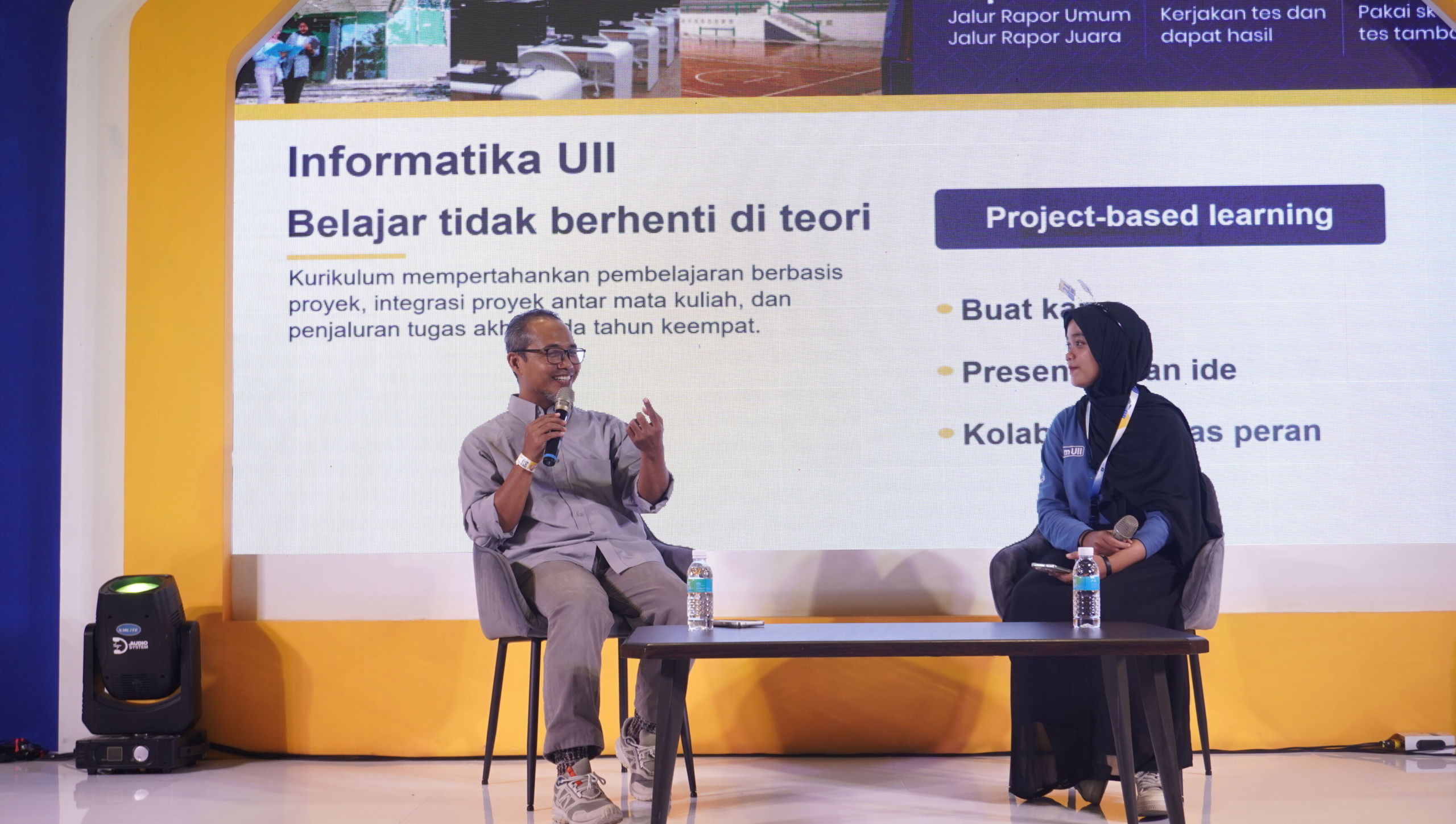
Yogyakarta — Program Studi Informatika Pendidikan Jarak Jauh (PJJ) Universitas Islam Indonesia (UII) sukses menyelenggarakan PJJ START — Student Ta’aruf Academic Relation Talk — pada Selasa, 7 April 2026. Acara yang berlangsung secara hybrid di Learning Space 2, FTI UII, sekaligus melalui Zoom Meeting ini menjadi ajang orientasi akademik bagi mahasiswa baru Informatika PJJ pada Semester Genap 2025/2026. Kegiatan dimulai pukul 08.00 WIB dan berjalan lancar hingga siang hari.
Rangkaian acara meliputi penjelasan akademik oleh Kaprodi, perkenalan dosen, tutor, tenaga kependidikan, dan asisten, hingga sesi sharing bersama alumni Informatika UII. Salah satu sesi yang paling dinantikan adalah Short Training seputar UII Gateway, Email UII-MFA, dan Classroom yang dipandu oleh Badan Sistem Informasi UII. Hadir sebagai narasumber dalam kegiatan ini, Reyhandri Muhammad Naufal, S.Kom dari Badan Sistem Informasi UII, Bamasatya Hendraprasta, S.Kom selaku alumni Informatika UII, serta Erika Ramadhani, S.T., M.Eng dari ITCentrum UII. Acara ditutup dengan sesi Perkenalan ITCentrum, tur fasilitas Informatika, dan makan siang bersama.
Semangat dan antusiasme mahasiswa baru tampak luar biasa, bahkan sebelum acara resmi dimulai. Salah satu peserta, Kak Elsa, rela menempuh perjalanan jauh dari Magetan menuju Yogyakarta dengan menaiki bus sejak pukul 02.00 dini hari demi tiba di kampus UII tepat waktu pukul 08.00 pagi. Tak kalah bersemangat, Kak Farid pun sudah bergegas berangkat usai menunaikan salat Subuh. Dedikasi para mahasiswa ini menjadi cerminan nyata komitmen mereka dalam menjalani perkuliahan jarak jauh di Informatika UII.
PJJ START diharapkan menjadi bekal awal yang kuat bagi mahasiswa baru dalam memahami sistem akademik, mengenal lingkungan kampus, serta membangun jejaring dengan sesama mahasiswa, dosen, dan alumni. Program Studi Informatika PJJ UII berkomitmen untuk terus mendukung mahasiswanya agar dapat menjalani perkuliahan secara optimal, di mana pun mereka berada.
At the crucial intersection of nursing science and information technology, a Master of Informatics student at UII, Ruhil Iswara, is pioneering a breakthrough in public health education. Through his research, he is developing and implementing a telehealth-based Basic Life Support (BLS) training platform aimed at the community of Pontianak City.
Basic Life Support is the foundation of the chain of survival in cases of sudden cardiac arrest. Statistics show that early intervention by a bystander can dramatically increase a victim’s chances of survival. However, this vital knowledge and skill set is not yet possessed by the majority of the Indonesian public.
Traditionally, BLS training is conducted face-to-face, requiring certified instructors, manikins, and adequate facilities. This model creates a significant access gap. Many regions, including cities outside of Java like Pontianak, face challenges such as a limited number of trainers, geographical barriers for participants, and sometimes prohibitive costs.
Ruhil Iswara, who holds a bachelor’s degree in nursing before delving into medical informatics, understood this gap intimately. He saw the immense potential of telehealth technology to democratize access to this life-saving training. The platform he is developing is designed to be an interactive, flexible, and measurable solution.
This telehealth platform is not just a one-way video tutorial. It is designed with interactive learning modules, animation-based simulations, and quizzes to test participant comprehension. The goal is to replicate, as much as possible, the learning experience of a physical classroom, ensuring participants not only watch but truly understand every critical step of BLS, from recognizing cardiac arrest and calling for help, to performing correct chest compressions.
To ensure that his technological solution is truly effective and acceptable, Ruhil does not stop at the development stage. He applies a robust academic evaluation framework, the HOT-Fit (Human-Organization-Technology Fit) model. This approach is used to analyze the fit and impact of the implemented technology from three main perspectives.
From the Human side, the research measures the increase in knowledge and satisfaction of participants after using the platform. From the Organization side, it analyzes how the system is accepted and supported by local health institutions, in this case, the local Health Department. Finally, from the Technology side, it evaluates the quality and usability of the platform itself.
“Digital technology like telehealth not only expands the reach of training but can also literally save lives,” Ruhil said of his vision. He hopes his research will provide strong scientific evidence that online BLS training is a valid and effective method.
Funding support from the Indonesian Ministry of Education, Culture, Research, and Technology for this research serves as an important validation. It indicates that the government sees the urgency in health education innovation and supports efforts that bridge the skills gap in society.
Ultimately, the project initiated by Ruhil Iswara is more than just an academic thesis. It is a blueprint for how cross-disciplinary synergy—between human-centered nursing and solution-oriented informatics—can create real and lasting social impact, building a nation that is better prepared and more resilient in the face of medical emergencies.
Research rooted in concern for the elderly in a regional area has given birth to a promising digital innovation. Wa Ode Tanti, a researcher from the UII academic community, is designing ElderCare Monitor, a health monitoring application aimed at bridging the care gap between families, communities, and formal health facilities in Muna Regency, Southeast Sulawesi.
The background for this research is a demographic phenomenon occurring in many parts of Indonesia, including Muna: a growing elderly population. However, this increase in life expectancy is often not accompanied by an improvement in quality of life. Many seniors face complex health challenges, while the support systems around them are not yet fully prepared.
In Muna Regency, this reality is reflected in the low participation rate of the elderly in the Elderly Integrated Health Post (Posyandu Lansia). Many of them lack access to adequate health information regarding degenerative diseases, nutrition, or physical activity. Furthermore, the family, as the primary care unit, is often not systematically involved in health monitoring, creating a cycle of reactive rather than preventive care.
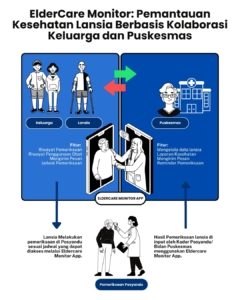
Eldecare Poster
Facing this situation, ElderCare Monitor is designed as a human-centered solution. Its development process utilizes a design thinking approach, a methodology that emphasizes empathy for the user. This means the application is not built on the developer’s assumptions, but on real needs identified through interviews and direct observation with the elderly, their families, and health workers.
The primary goal of this approach is to ensure the final application is genuinely user-friendly for all parties. For the elderly or their families, the interface is designed to be simple for reporting vital data or symptoms. For Puskesmas officers, the app provides a structured platform to receive and analyze this data.
The core feature of ElderCare Monitor is its ability to create a collaborative care ecosystem. A child or relative can regularly input their parent’s health data—such as blood pressure, blood sugar levels, or daily complaints—into the application. This data can then be accessed in real-time by a designated health worker at the Community Health Center (Puskesmas).
This model transforms the care paradigm. The family is no longer a passive bystander but an active partner to medical professionals. On the other hand, health workers can efficiently monitor dozens of elderly individuals in their area without waiting for physical visits, allowing for early intervention if signs of deteriorating conditions are detected.
Wa Ode Tanti hopes her research will make a tangible contribution that goes beyond a technological product. Her vision is to “realize elderly care that is more humane, collaborative, and community-based.” It is about restoring dignity and attention to seniors through empowering technology.
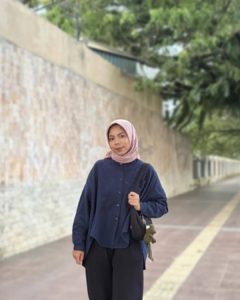
Wa Ode Tantri
The research also beautifully illustrates how technology can serve as a bridge. It not only connects the formal health system with local wisdom in caring for parents but also strengthens the bond between generations within a family through shared caregiving responsibilities.
This relevant and impactful research project has received recognition and funding support from the Directorate of Research, Technology, and Community Service (DRTPM) of the Indonesian Ministry of Education, Culture, Research, and Technology. This support affirms the importance of innovations born from the real needs of society and that have the potential to be replicated in other regions with similar challenges.